Sensitive Skin Minimal Routine: Tips & Layering Guide

sensitive skin minimal routine

Sensitive Skin Minimal Routine

Sensitive skin reacts easily to irritants, harsh chemicals, and over-exfoliation. A minimalist routine reduces triggers while delivering hydration and barrier support.

The key is using fewer products with multifunctional ingredients for maximum benefit without irritation.


Core Principles

  • Keep steps under 5 daily

  • Use gentle cleansers

  • Prioritize hydration + barrier repair

  • Avoid fragrance and alcohol

  • Introduce actives gradually

Dehydrated AND Dry Skin

Essential Ingredients for Sensitive Skin Minimal Routine

Humectants

Purpose: Draw water into skin
Examples:

  • Hyaluronic acid (low molecular weight for penetration)

  • Glycerin

  • Aloe vera

Barrier-Repair Lipids

Purpose: Prevent water loss and calm irritation
Examples:

  • Ceramides

  • Squalane

  • Fatty acids

Soothing Botanicals

Purpose: Reduce redness and strengthen skin resilience
Examples:

  • Centella Asiatica

  • Chamomile extract

  • Calendula


Step-by-Step Minimal Routine

Morning:

  1. Gentle Cleanser – Foam-free, non-stripping

  2. Hydrating Toner or Essence – Humectants + calming ingredients

  3. Moisturizer – Lightweight, ceramide-rich

  4. Sunscreen – Mineral SPF for minimal irritation

Evening:

  1. Cleanser

  2. Hydrating Serum / Essence – HA or aloe

  3. Moisturizer / Lightweight Oil – Squalane or plant oils

Optional: Weekly mild exfoliant (PHA) if skin tolerates


Tips for Minimizing Irritation

  • Patch test new products

  • Layer thin → thick for absorption

  • Avoid combining multiple strong actives

  • Limit fragrance, alcohol, and essential oils

  • Maintain consistent routine rather than frequent changes


Signs Your Routine Works

  • Skin feels soft, smooth, and calm

  • Reduced redness and reactivity

  • No tightness or stinging after cleansing

  • Improved hydration and natural glow

Q&A sensitive skin minimal routine

Q1: Can sensitive skin use hyaluronic acid?
Yes — low molecular weight HA is generally safe and hydrating.

Q2: How often should I apply moisturizer?
Twice daily is sufficient; layer on top of serums.

Q3: Are exfoliants safe for sensitive skin?
Mild PHAs 1–2 times per week; avoid AHAs/BHAs unless skin is conditioned.

Q4: Can I simplify to only 3 steps?
Yes — gentle cleanser, hydrating serum, and moisturizer is a minimal functional routine.

Q5: Should I avoid all active ingredients?
Not necessarily — introduce Niacinamide or peptides gradually for barrier support.
Dehydrated vs Dry Skin: Key Differences Explained

Dehydrated vs Dry Skin

Dehydrated vs Dry Skin

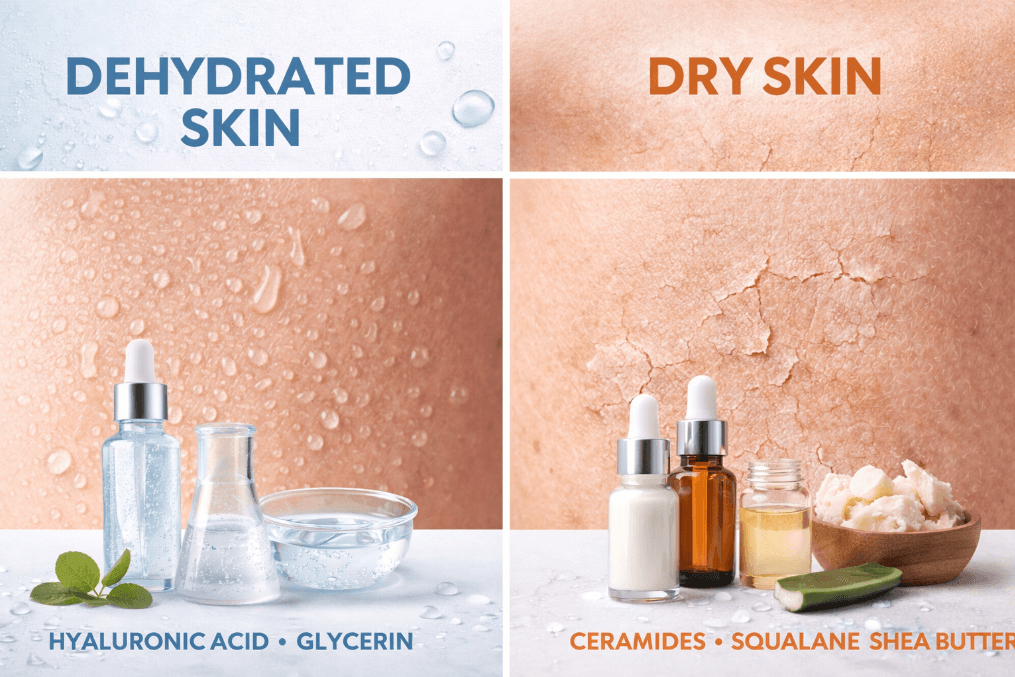
Many people use the terms interchangeably, yet they describe two completely different skin concerns. Understanding the distinction is essential for choosing effective skincare products and treatments.

Dry skin is a skin type, while dehydrated skin is a temporary condition related to water loss.


What Is Dry Skin?

Dry skin lacks oil (sebum). It is genetically determined and usually persistent throughout life.

Characteristics of Dry Skin

  • Flaky or rough texture

  • Visible scaling

  • Tightness year-round

  • Fine lines due to lipid deficiency

  • Dull tone

Sebum plays a protective role. When levels are low, the barrier weakens, leading to moisture escape.

Glass Skin routine


What Is Dehydrated Skin?

Dehydrated skin lacks water, not oil. It can affect all skin types — including oily and acne-prone skin.

Common Signs

  • Tightness after cleansing

  • Dull or tired appearance

  • Fine dehydration lines

  • Increased sensitivity

  • Overproduction of oil

Skin may appear shiny yet feel tight — a classic dehydration indicator.


Dehydrated vs Dry Skin: Core Differences

Factor Dehydrated Skin Dry Skin
Lacks Water Oil
Type or Condition Condition Skin type
Can Affect Oily Skin Yes No
Appearance Dull, tight Flaky, rough
Main Need Hydration Lipid nourishment

Causes of Dehydrated Skin

Multiple internal and external factors contribute to water loss.

Lifestyle triggers:

  • Low water intake

  • Excess caffeine

  • Alcohol consumption

  • Poor diet

Environmental triggers:

  • Air conditioning

  • Cold weather

  • Sun exposure

  • Pollution

Skincare mistakes:

  • Over-exfoliation

  • Harsh cleansers

  • Skipping moisturizer

HA Aqua vs Serums

Causes of Dry Skin

Dry skin is primarily genetic but can worsen due to:

  • Aging (reduced sebum)

  • Hormonal changes

  • Harsh soaps

  • Long hot showers

Barrier lipid depletion is the central issue.


Ingredient Needs: Hydration vs Nourishment

Best for Dehydrated Skin

Focus on humectants that bind water.

Top ingredients:

  • Hyaluronic acid

  • Glycerin

  • Polyglutamic acid

  • Aloe vera

  • Panthenol

These restore water balance and improve plumpness.


Best for Dry Skin

Dry skin requires lipids and barrier repair.

Key ingredients:

  • Ceramides

  • Shea butter

  • Squalane

  • Fatty acids

  • Cholesterol

They rebuild the protective barrier and prevent water loss.


Texture & Pore Behavior

Dehydrated skin:

  • Pores appear more visible

  • Skin looks crepey when pinched

  • Makeup cracks easily

Dry skin:

  • Pores usually small

  • Texture feels rough

  • Foundation clings to flakes


Treatment Approaches

For Dehydrated Skin

  • Layer hydrating toners

  • Use HA serums on damp skin

  • Add skin boosters if severe

  • Limit exfoliation

For Dry Skin

  • Use cream cleansers

  • Apply ceramide moisturizers

  • Incorporate facial oils

  • Avoid foaming products


Can You Have Both?

Yes — combination cases exist.

Skin may lack oil and water simultaneously, especially with aging or barrier damage.

Treatment strategy:

  • Hydrate first (humectants)

  • Seal second (lipids)

Layering both is essential.

Q&A About dehydrated-vs-dry-skin

Q1: How can I test if my skin is dehydrated?
Pinch the skin gently. If fine lines appear instantly, dehydration is likely.

Q2: Is oily skin ever dehydrated?
Yes. Oil overproduction often compensates for water loss.

Q3: Which is easier to treat?
Dehydration is usually faster to improve with proper hydration products.

Q4: Do I need different moisturizers for each?
Yes. Dehydrated skin needs water-binding formulas; dry skin needs lipid-rich creams.

Q5: Can weather cause both conditions?
Cold or dry climates can worsen dryness and trigger dehydration simultaneously.

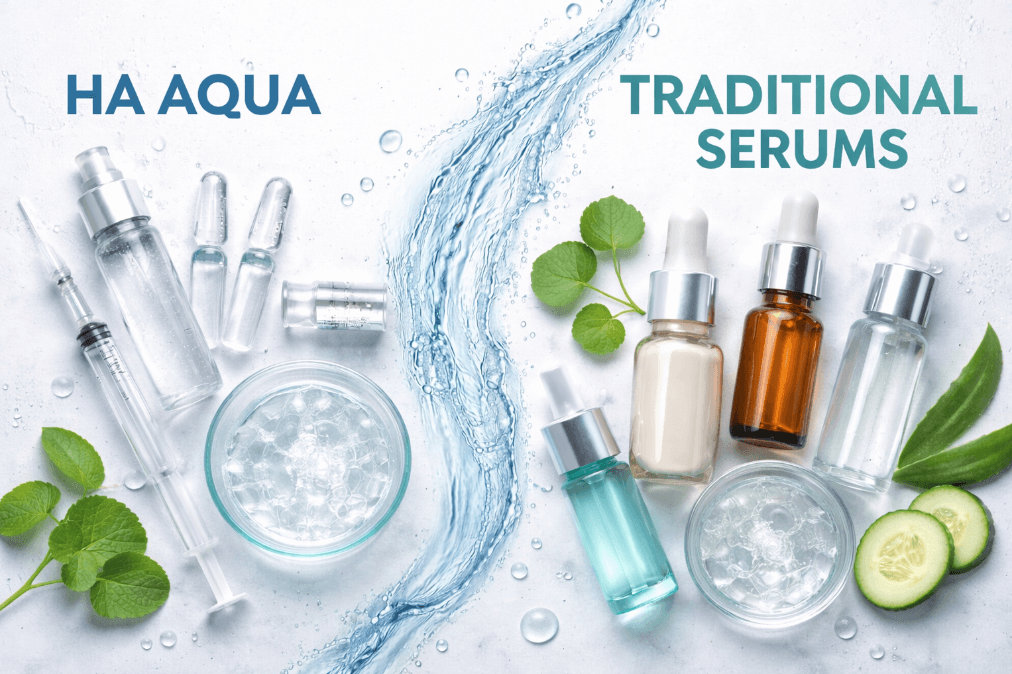
HA Aqua vs Traditional Serums: Benefits, Results & Use Cases

HA Aqua vs Traditional Serums

HA Aqua vs Traditional Serums

Hydration products vary significantly in delivery method, molecular structure, and skin penetration. While traditional serums hydrate the epidermis, advanced solutions like HA Aqua are designed to reach deeper layers for longer-lasting moisture.

Understanding the functional differences helps determine which option aligns with specific skin goals.

What Is HA Aqua?

HA Aqua refers to professional or clinical-grade hyaluronic acid formulations designed for intensive hydration.

Depending on the format, it may be delivered via:

  • Skin boosters

  • Mesotherapy

  • Microinjections

  • Advanced topical ampoules

These formulations often contain multi-molecular hyaluronic acid combined with supportive nutrients.

What Are Traditional Hydrating Serums?

Traditional serums are topical formulations applied during daily skincare routines.

They usually include:

  • Hyaluronic acid

  • Glycerin

  • Panthenol

  • Aloe vera

  • Peptides

Their primary function is surface hydration and short-term plumping.

Our Product: Aqua HA 2

Hydration Depth: Surface vs Dermal Layers

Traditional Serums

  • Work mainly on the epidermis

  • Improve immediate softness

  • Reduce dehydration lines temporarily

HA Aqua

  • Penetrates deeper via delivery techniques

  • Hydrates dermal tissue

  • Improves long-term water retention

Depth of hydration directly impacts glow longevity and elasticity.

Molecular Structure & Absorption

Hydrating performance depends on molecule size.

Traditional serums:

  • Often contain high-molecular HA

  • Sit on the skin surface

  • Create a moisture film

HA Aqua formulations:

  • Combine low + medium molecular HA

  • Reach deeper hydration reservoirs

  • Stimulate internal moisture balance

Duration of Results

Traditional Serums

  • Last 12–48 hours

  • Require daily reapplication

  • Effects fade if routine stops

HA Aqua

  • Results last weeks to months

  • Gradual hydration build-up

  • Improves baseline skin quality

Skin Benefits Comparison:

Traditional Serums

  • Instant plumping

  • Smooth makeup application

  • Affordable & accessible

  • Easy daily integration

HA Aqua

  • Deep tissue hydration

  • Improved elasticity

  • Enhanced glow from within

  • Supports collagen environment

Ideal Candidates

Traditional serums suit:

  • Mild dehydration

  • Younger skin

  • Preventive routines

  • Minimalist skincare users

HA Aqua suits:

  • Chronic dehydration

  • Dull or crepey texture

  • Post-procedure recovery

  • Glass skin seekers

Routine Integration

You don’t necessarily choose one over the other.

Best strategy:

  • Use HA Aqua as periodic treatment

  • Maintain results with daily serums

Layering example:

  1. Hydrating toner

  2. Traditional HA serum

  3. Moisturizer (ceramides)

  4. SPF

Clinical hydration enhances topical performance.

Cost vs Value Consideration

Traditional serums:

  • Lower upfront cost

  • Ongoing purchase cycle

HA Aqua:

  • Higher single-session cost

  • Longer hydration longevity

  • Fewer repeat applications

Value depends on hydration severity and aesthetic goals.

Mistakes When Comparing Both

  • Expecting identical results

  • Skipping moisturizer after serums

  • Overusing actives post-booster

  • Ignoring maintenance skincare

Both methods function best when combined strategically.

Q&A Section About HA Aqua vs Traditional Serums

Q1: Is HA Aqua better than traditional serums?
Not universally. It provides deeper hydration, but serums remain essential for daily maintenance.

Q2: How long do HA Aqua results last?
Typically several weeks, depending on formulation and skin condition.

Q3: Can I stop using serums after HA Aqua?
No. Topical hydration preserves and extends booster results.

Q4: Which is better for glass skin?
A combination — boosters for depth, serums for surface glow.

Q5: Is HA Aqua safe for sensitive skin?
Generally yes when performed professionally, often improving barrier strength.

Hydration Skincare Essentials for Healthy, Plump Skin

hydration skincare

Hydration Skincare: The Science of Deep Skin Moisture

Hydration skincare focuses on increasing water content within the skin rather than simply sealing the surface. Proper hydration improves elasticity, smoothness, barrier strength, and the reflective glow associated with healthy skin.

Unlike basic moisturizing, hydration targets the movement, retention, and distribution of water across skin layers.

Why Hydration Skincare Matters

Dehydrated skin can affect all skin types — oily, combination, and even acne-prone.

When hydration is lacking, skin may show:

  • Dull tone and fatigue

  • Fine dehydration lines

  • Tightness after cleansing

  • Increased oil production

  • Makeup patchiness

Restoring hydration helps normalize skin function and enhances treatment results.

Collagen Booster for Face and Skin

Key Ingredients in Hydration Skincare

Hyaluronic Acid (HA)

A cornerstone ingredient due to its water-binding capacity.

Benefits:

  • Immediate plumping effect

  • Smooths fine lines

  • Improves suppleness

For best results, apply to damp skin and seal with a moisturizer.

Glycerin

One of the most effective humectants in skincare.

Why it works:

  • Draws water from environment and deeper skin layers

  • Strengthens barrier function

  • Non-irritating and acne-safe

Often paired with HA for layered hydration.

Polyglutamic Acid

A newer hydration molecule gaining popularity.

Key advantages:

  • Holds more water than HA (surface level)

  • Enhances skin softness

  • Reduces transepidermal water loss

Aloe Vera

Provides both hydration and soothing benefits.

Ideal for:

  • Sensitive skin

  • Post-procedure care

  • Sun exposure recovery

Panthenol (Pro-Vitamin B5)

A dual hydrator and barrier repair agent.

Functions:

  • Attracts moisture

  • Calms irritation

  • Improves elasticity

Hydration vs Moisturization: Understanding the Difference

Many routines fail because hydration and moisturization are treated as the same step.

Hydration:

  • Adds water to skin

  • Uses humectants (HA, glycerin)

Moisturization:

  • Locks water in

  • Uses occlusives/emollients (ceramides, squalane)

Both are required for lasting results.

Building an Effective Hydration Skincare Routine

Step-by-Step Structure

  1. Gentle Cleanser
    Avoid sulfates that strip natural moisture.

  2. Hydrating Toner
    Preps skin for absorption.

  3. Essence or Ampoule
    Delivers concentrated humectants.

  4. Hydration Serum
    HA, polyglutamic acid, peptides.

  5. Moisturizer
    Seals hydration with ceramides or lipids.

  6. SPF (Daytime)
    Prevents dehydration from UV damage.

Professional Hydration Treatments

For deeper or faster results, in-clinic options may complement topical skincare.

Popular treatments include:

  • Skin boosters (micro-injected HA)

  • Mesotherapy hydration cocktails

  • Biorevitalization treatments

These target dermal hydration where topical products cannot fully reach.

Hydration Tips That Improve Results

  • Apply humectants on damp skin

  • Use lukewarm — not hot — water

  • Limit over-exfoliation

  • Add a humidifier in dry climates

  • Drink water, but rely on topical hydration too

Hydration is both internal and external.

Signs Your Hydration Routine Is Working

You may notice:

  • Increased skin bounce

  • Smoother texture

  • Reduced fine lines

  • Better product absorption

  • Natural, glass-like glow

Consistency is key — hydration improves progressively.

Q&A About hydration skincare

Q1: Can oily skin skip hydration products?
No. Dehydration can increase oil production as compensation.

Q2: How often should I use hydrating serums?
Daily, morning and night, unless paired with strong actives.

Q3: Is drinking water enough for hydrated skin?
Internal hydration helps overall health, but topical humectants are still necessary.

Q4: Can hydration reduce wrinkles?
It softens fine dehydration lines but does not replace collagen treatments.

Q5: What is the best ingredient for instant hydration?
Hyaluronic acid provides the fastest visible plumping effect.

Best Ingredients for Glass Skin That Deliver Real Hydration

Best Ingredients for Glass Skin

Best Ingredients for Glass Skin

Glass skin refers to a complexion that appears intensely hydrated, smooth, pore-refined, and light-reflective. Achieving this effect depends less on makeup and more on ingredient selection, barrier repair, and deep hydration at multiple skin layers.

Below are the most effective, dermatologist-recommended ingredients that directly support the glass skin look.


Hyaluronic Acid (Multi-Molecular HA)

Hyaluronic acid is foundational for any glass skin routine because it binds water within the skin.

Why it matters:

  • Holds up to 1,000× its weight in water

  • Plumps fine lines instantly

  • Improves light reflection (key for “glass” effect)

Best practices:

  • Apply on damp skin

  • Seal with moisturizer

  • Use multi-weight formulas for deeper penetration

Our Products


Niacinamide (Vitamin B3)

Niacinamide balances oil, refines pores, and strengthens the barrier — three pillars of glass skin.

Key benefits:

  • Minimizes pore appearance

  • Regulates sebum

  • Improves uneven tone

  • Boosts ceramide production

Ideal concentration: 2–5% for daily use without irritation.


Snail Mucin (Advanced Barrier Repair)

Popular in Korean skincare, snail mucin supports regeneration and deep hydration.

Why it’s effective:

  • Rich in glycoproteins

  • Enhances wound healing

  • Improves elasticity

  • Creates a dewy finish without heaviness

It is especially beneficial for post-acne texture and dehydration lines.


Ceramides

Glass skin is impossible without a healthy barrier. Ceramides restore and seal hydration.

Functions:

  • Prevent transepidermal water loss (TEWL)

  • Repair compromised skin

  • Reduce sensitivity

  • Improve smoothness

Look for ceramide blends combined with cholesterol and fatty acids.

Best Glass Skin Routine


Polyglutamic Acid

Often compared to hyaluronic acid but works differently.

Advantages:

  • Forms a moisture film on the surface

  • Enhances HA performance

  • Provides immediate glow

Excellent for layering in glass skin routines.


Alpha Arbutin

Clarity and translucency are essential for glass skin. Alpha arbutin targets pigmentation safely.

Benefits:

  • Fades dark spots

  • Evens tone

  • Suitable for sensitive skin

  • Works well with vitamin C


Centella Asiatica (Cica)

Inflammation disrupts skin smoothness. Centella calms and repairs.

Key actions:

  • Reduces redness

  • Speeds healing

  • Strengthens barrier

  • Improves hydration retention

Ideal after exfoliation or professional treatments.


Gentle Chemical Exfoliants (AHAs & PHAs)

Smooth texture is critical for reflective skin.

Recommended acids:

  • Lactic acid → Hydrating exfoliation

  • Mandelic acid → Sensitive skin friendly

  • PHAs → Mild resurfacing + hydration

Use tips:

  • 1–3× weekly only

  • Avoid over-exfoliation

  • Always follow with barrier repair


Supporting Ingredients That Enhance Results

While not always primary, these ingredients amplify the glass skin effect:

  • Panthenol → Deep soothing hydration

  • Beta-Glucan → Strong humectant + repair

  • Squalane → Lightweight lipid replenishment

  • Green Tea Extract → Antioxidant protection

  • Peptides → Improve elasticity and bounce


Ingredient Layering Strategy for Glass Skin

Order of application impacts results.

Suggested layering:

  1. Hydrating toner (HA / Panthenol)

  2. Essence (Snail mucin / Centella)

  3. Treatment serum (Niacinamide / Arbutin)

  4. Booster (Polyglutamic acid / Peptides)

  5. Moisturizer (Ceramides)

  6. SPF (Daytime non-negotiable)

Layering thin → thick ensures optimal absorption.


Mistakes That Prevent Glass Skin Results

Even with the best ingredients, improper use limits outcomes.

Common issues:

  • Over-exfoliating the barrier

  • Skipping moisturizer after HA

  • Mixing too many actives

  • Ignoring sunscreen

  • Using harsh foaming cleansers

Consistency outperforms complexity.

Q&A About Best Ingredients for Glass Skin

Q1: Can I achieve glass skin with ingredients alone?
Yes, if dehydration and texture are mild. Deeper concerns may require professional hydration boosters.

Q2: How long before results appear?
Hydration glow can appear within days; pore and tone refinement may take 4–8 weeks.

Q3: Are oils necessary for glass skin?
Not always. Lightweight lipids like squalane are sufficient for most routines.

Q4: Can sensitive skin follow a glass skin routine?
Yes — focus on ceramides, centella, snail mucin, and PHAs instead of strong acids.

Q5: Which ingredient is most essential?
Hyaluronic acid remains the core due to its unmatched hydration capacity.