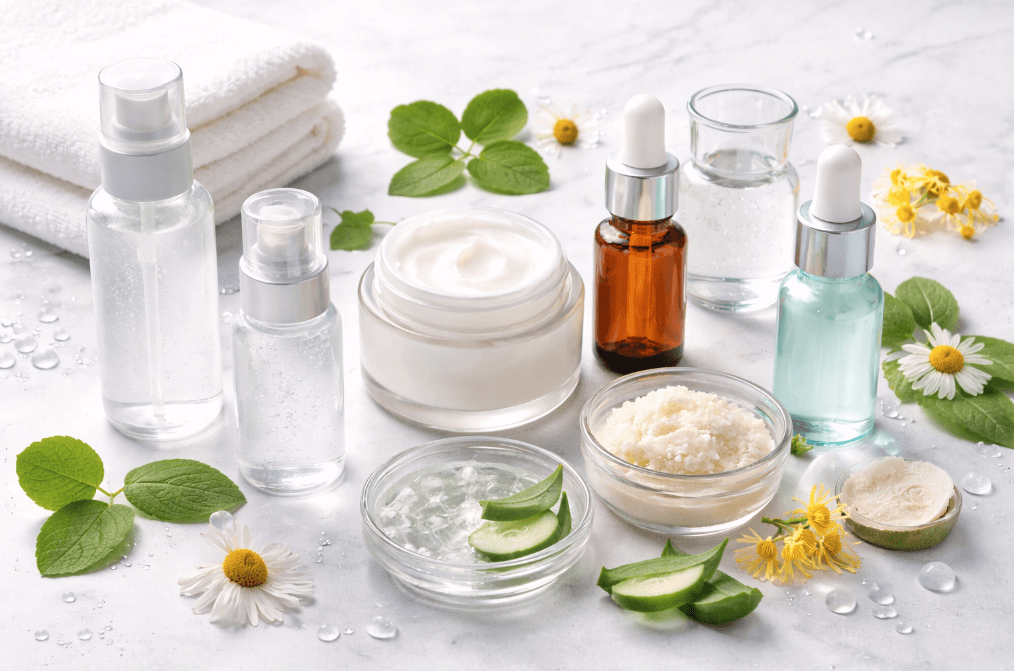
Sensitive Skin Minimal Routine: Tips & Layering Guide

sensitive skin minimal routine

Sensitive Skin Minimal Routine

Sensitive skin reacts easily to irritants, harsh chemicals, and over-exfoliation. A minimalist routine reduces triggers while delivering hydration and barrier support.

The key is using fewer products with multifunctional ingredients for maximum benefit without irritation.


Core Principles

  • Keep steps under 5 daily

  • Use gentle cleansers

  • Prioritize hydration + barrier repair

  • Avoid fragrance and alcohol

  • Introduce actives gradually

Dehydrated AND Dry Skin

Essential Ingredients for Sensitive Skin Minimal Routine

Humectants

Purpose: Draw water into skin
Examples:

  • Hyaluronic acid (low molecular weight for penetration)

  • Glycerin

  • Aloe vera

Barrier-Repair Lipids

Purpose: Prevent water loss and calm irritation
Examples:

  • Ceramides

  • Squalane

  • Fatty acids

Soothing Botanicals

Purpose: Reduce redness and strengthen skin resilience
Examples:

  • Centella Asiatica

  • Chamomile extract

  • Calendula


Step-by-Step Minimal Routine

Morning:

  1. Gentle Cleanser – Foam-free, non-stripping

  2. Hydrating Toner or Essence – Humectants + calming ingredients

  3. Moisturizer – Lightweight, ceramide-rich

  4. Sunscreen – Mineral SPF for minimal irritation

Evening:

  1. Cleanser

  2. Hydrating Serum / Essence – HA or aloe

  3. Moisturizer / Lightweight Oil – Squalane or plant oils

Optional: Weekly mild exfoliant (PHA) if skin tolerates


Tips for Minimizing Irritation

  • Patch test new products

  • Layer thin → thick for absorption

  • Avoid combining multiple strong actives

  • Limit fragrance, alcohol, and essential oils

  • Maintain consistent routine rather than frequent changes


Signs Your Routine Works

  • Skin feels soft, smooth, and calm

  • Reduced redness and reactivity

  • No tightness or stinging after cleansing

  • Improved hydration and natural glow

Q&A sensitive skin minimal routine

Q1: Can sensitive skin use hyaluronic acid?
Yes — low molecular weight HA is generally safe and hydrating.

Q2: How often should I apply moisturizer?
Twice daily is sufficient; layer on top of serums.

Q3: Are exfoliants safe for sensitive skin?
Mild PHAs 1–2 times per week; avoid AHAs/BHAs unless skin is conditioned.

Q4: Can I simplify to only 3 steps?
Yes — gentle cleanser, hydrating serum, and moisturizer is a minimal functional routine.

Q5: Should I avoid all active ingredients?
Not necessarily — introduce Niacinamide or peptides gradually for barrier support.

Dehydrated vs Dry Skin: Key Differences Explained

Dehydrated vs Dry Skin

Dehydrated vs Dry Skin

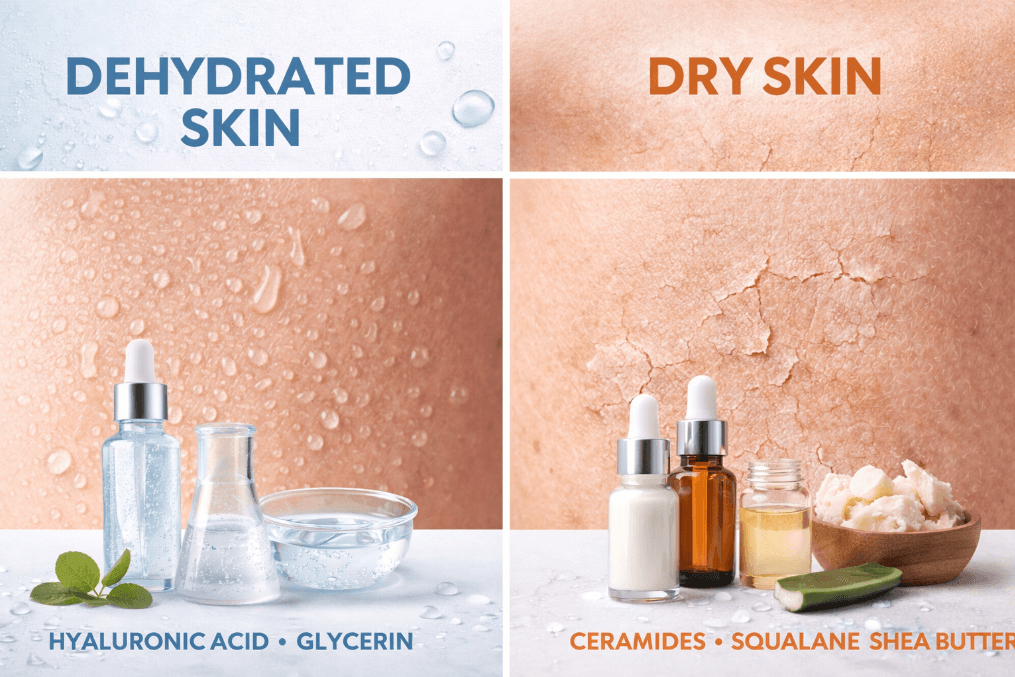
Many people use the terms interchangeably, yet they describe two completely different skin concerns. Understanding the distinction is essential for choosing effective skincare products and treatments.

Dry skin is a skin type, while dehydrated skin is a temporary condition related to water loss.


What Is Dry Skin?

Dry skin lacks oil (sebum). It is genetically determined and usually persistent throughout life.

Characteristics of Dry Skin

  • Flaky or rough texture

  • Visible scaling

  • Tightness year-round

  • Fine lines due to lipid deficiency

  • Dull tone

Sebum plays a protective role. When levels are low, the barrier weakens, leading to moisture escape.

Glass Skin routine


What Is Dehydrated Skin?

Dehydrated skin lacks water, not oil. It can affect all skin types — including oily and acne-prone skin.

Common Signs

  • Tightness after cleansing

  • Dull or tired appearance

  • Fine dehydration lines

  • Increased sensitivity

  • Overproduction of oil

Skin may appear shiny yet feel tight — a classic dehydration indicator.


Dehydrated vs Dry Skin: Core Differences

Factor Dehydrated Skin Dry Skin
Lacks Water Oil
Type or Condition Condition Skin type
Can Affect Oily Skin Yes No
Appearance Dull, tight Flaky, rough
Main Need Hydration Lipid nourishment

Causes of Dehydrated Skin

Multiple internal and external factors contribute to water loss.

Lifestyle triggers:

  • Low water intake

  • Excess caffeine

  • Alcohol consumption

  • Poor diet

Environmental triggers:

  • Air conditioning

  • Cold weather

  • Sun exposure

  • Pollution

Skincare mistakes:

  • Over-exfoliation

  • Harsh cleansers

  • Skipping moisturizer

HA Aqua vs Serums

Causes of Dry Skin

Dry skin is primarily genetic but can worsen due to:

  • Aging (reduced sebum)

  • Hormonal changes

  • Harsh soaps

  • Long hot showers

Barrier lipid depletion is the central issue.


Ingredient Needs: Hydration vs Nourishment

Best for Dehydrated Skin

Focus on humectants that bind water.

Top ingredients:

  • Hyaluronic acid

  • Glycerin

  • Polyglutamic acid

  • Aloe vera

  • Panthenol

These restore water balance and improve plumpness.


Best for Dry Skin

Dry skin requires lipids and barrier repair.

Key ingredients:

  • Ceramides

  • Shea butter

  • Squalane

  • Fatty acids

  • Cholesterol

They rebuild the protective barrier and prevent water loss.


Texture & Pore Behavior

Dehydrated skin:

  • Pores appear more visible

  • Skin looks crepey when pinched

  • Makeup cracks easily

Dry skin:

  • Pores usually small

  • Texture feels rough

  • Foundation clings to flakes


Treatment Approaches

For Dehydrated Skin

  • Layer hydrating toners

  • Use HA serums on damp skin

  • Add skin boosters if severe

  • Limit exfoliation

For Dry Skin

  • Use cream cleansers

  • Apply ceramide moisturizers

  • Incorporate facial oils

  • Avoid foaming products


Can You Have Both?

Yes — combination cases exist.

Skin may lack oil and water simultaneously, especially with aging or barrier damage.

Treatment strategy:

  • Hydrate first (humectants)

  • Seal second (lipids)

Layering both is essential.

Q&A About dehydrated-vs-dry-skin

Q1: How can I test if my skin is dehydrated?
Pinch the skin gently. If fine lines appear instantly, dehydration is likely.

Q2: Is oily skin ever dehydrated?
Yes. Oil overproduction often compensates for water loss.

Q3: Which is easier to treat?
Dehydration is usually faster to improve with proper hydration products.

Q4: Do I need different moisturizers for each?
Yes. Dehydrated skin needs water-binding formulas; dry skin needs lipid-rich creams.

Q5: Can weather cause both conditions?
Cold or dry climates can worsen dryness and trigger dehydration simultaneously.

HA Aqua vs Traditional Serums: Benefits, Results & Use Cases

HA Aqua vs Traditional Serums

HA Aqua vs Traditional Serums

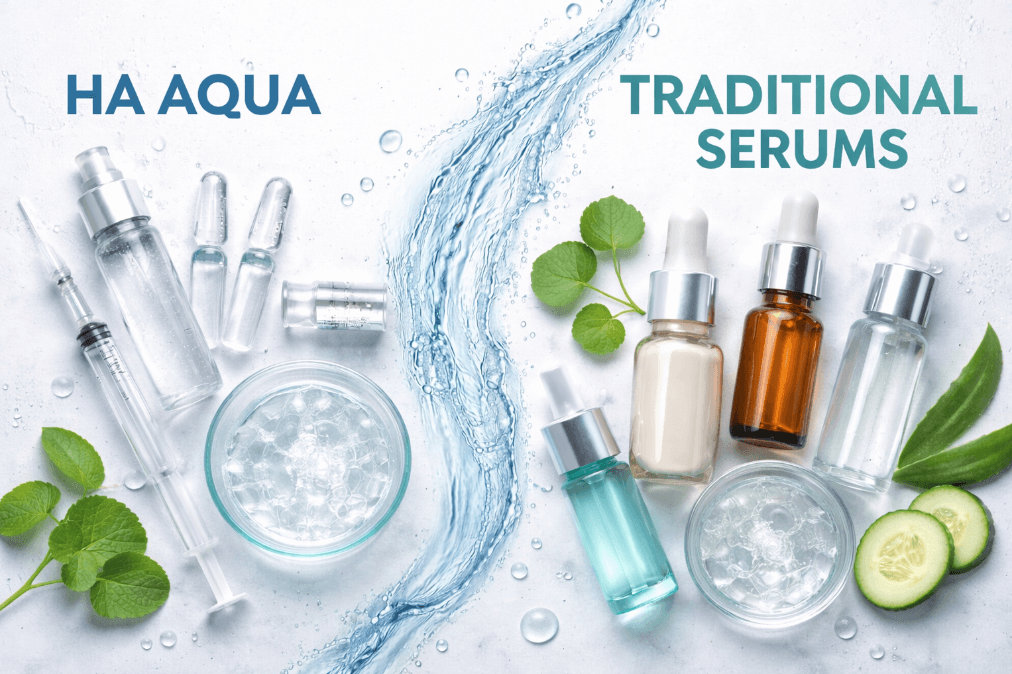
Hydration products vary significantly in delivery method, molecular structure, and skin penetration. While traditional serums hydrate the epidermis, advanced solutions like HA Aqua are designed to reach deeper layers for longer-lasting moisture.

Understanding the functional differences helps determine which option aligns with specific skin goals.

What Is HA Aqua?

HA Aqua refers to professional or clinical-grade hyaluronic acid formulations designed for intensive hydration.

Depending on the format, it may be delivered via:

  • Skin boosters

  • Mesotherapy

  • Microinjections

  • Advanced topical ampoules

These formulations often contain multi-molecular hyaluronic acid combined with supportive nutrients.

What Are Traditional Hydrating Serums?

Traditional serums are topical formulations applied during daily skincare routines.

They usually include:

  • Hyaluronic acid

  • Glycerin

  • Panthenol

  • Aloe vera

  • Peptides

Their primary function is surface hydration and short-term plumping.

Our Product: Aqua HA 2

Hydration Depth: Surface vs Dermal Layers

Traditional Serums

  • Work mainly on the epidermis

  • Improve immediate softness

  • Reduce dehydration lines temporarily

HA Aqua

  • Penetrates deeper via delivery techniques

  • Hydrates dermal tissue

  • Improves long-term water retention

Depth of hydration directly impacts glow longevity and elasticity.

Molecular Structure & Absorption

Hydrating performance depends on molecule size.

Traditional serums:

  • Often contain high-molecular HA

  • Sit on the skin surface

  • Create a moisture film

HA Aqua formulations:

  • Combine low + medium molecular HA

  • Reach deeper hydration reservoirs

  • Stimulate internal moisture balance

Duration of Results

Traditional Serums

  • Last 12–48 hours

  • Require daily reapplication

  • Effects fade if routine stops

HA Aqua

  • Results last weeks to months

  • Gradual hydration build-up

  • Improves baseline skin quality

Skin Benefits Comparison:

Traditional Serums

  • Instant plumping

  • Smooth makeup application

  • Affordable & accessible

  • Easy daily integration

HA Aqua

  • Deep tissue hydration

  • Improved elasticity

  • Enhanced glow from within

  • Supports collagen environment

Ideal Candidates

Traditional serums suit:

  • Mild dehydration

  • Younger skin

  • Preventive routines

  • Minimalist skincare users

HA Aqua suits:

  • Chronic dehydration

  • Dull or crepey texture

  • Post-procedure recovery

  • Glass skin seekers

Routine Integration

You don’t necessarily choose one over the other.

Best strategy:

  • Use HA Aqua as periodic treatment

  • Maintain results with daily serums

Layering example:

  1. Hydrating toner

  2. Traditional HA serum

  3. Moisturizer (ceramides)

  4. SPF

Clinical hydration enhances topical performance.

Cost vs Value Consideration

Traditional serums:

  • Lower upfront cost

  • Ongoing purchase cycle

HA Aqua:

  • Higher single-session cost

  • Longer hydration longevity

  • Fewer repeat applications

Value depends on hydration severity and aesthetic goals.

Mistakes When Comparing Both

  • Expecting identical results

  • Skipping moisturizer after serums

  • Overusing actives post-booster

  • Ignoring maintenance skincare

Both methods function best when combined strategically.

Q&A Section About HA Aqua vs Traditional Serums

Q1: Is HA Aqua better than traditional serums?
Not universally. It provides deeper hydration, but serums remain essential for daily maintenance.

Q2: How long do HA Aqua results last?
Typically several weeks, depending on formulation and skin condition.

Q3: Can I stop using serums after HA Aqua?
No. Topical hydration preserves and extends booster results.

Q4: Which is better for glass skin?
A combination — boosters for depth, serums for surface glow.

Q5: Is HA Aqua safe for sensitive skin?
Generally yes when performed professionally, often improving barrier strength.

Hydration Skincare Essentials for Healthy, Plump Skin

hydration skincare

Hydration Skincare: The Science of Deep Skin Moisture

Hydration skincare focuses on increasing water content within the skin rather than simply sealing the surface. Proper hydration improves elasticity, smoothness, barrier strength, and the reflective glow associated with healthy skin.

Unlike basic moisturizing, hydration targets the movement, retention, and distribution of water across skin layers.

Why Hydration Skincare Matters

Dehydrated skin can affect all skin types — oily, combination, and even acne-prone.

When hydration is lacking, skin may show:

  • Dull tone and fatigue

  • Fine dehydration lines

  • Tightness after cleansing

  • Increased oil production

  • Makeup patchiness

Restoring hydration helps normalize skin function and enhances treatment results.

Collagen Booster for Face and Skin

Key Ingredients in Hydration Skincare

Hyaluronic Acid (HA)

A cornerstone ingredient due to its water-binding capacity.

Benefits:

  • Immediate plumping effect

  • Smooths fine lines

  • Improves suppleness

For best results, apply to damp skin and seal with a moisturizer.

Glycerin

One of the most effective humectants in skincare.

Why it works:

  • Draws water from environment and deeper skin layers

  • Strengthens barrier function

  • Non-irritating and acne-safe

Often paired with HA for layered hydration.

Polyglutamic Acid

A newer hydration molecule gaining popularity.

Key advantages:

  • Holds more water than HA (surface level)

  • Enhances skin softness

  • Reduces transepidermal water loss

Aloe Vera

Provides both hydration and soothing benefits.

Ideal for:

  • Sensitive skin

  • Post-procedure care

  • Sun exposure recovery

Panthenol (Pro-Vitamin B5)

A dual hydrator and barrier repair agent.

Functions:

  • Attracts moisture

  • Calms irritation

  • Improves elasticity

Hydration vs Moisturization: Understanding the Difference

Many routines fail because hydration and moisturization are treated as the same step.

Hydration:

  • Adds water to skin

  • Uses humectants (HA, glycerin)

Moisturization:

  • Locks water in

  • Uses occlusives/emollients (ceramides, squalane)

Both are required for lasting results.

Building an Effective Hydration Skincare Routine

Step-by-Step Structure

  1. Gentle Cleanser
    Avoid sulfates that strip natural moisture.

  2. Hydrating Toner
    Preps skin for absorption.

  3. Essence or Ampoule
    Delivers concentrated humectants.

  4. Hydration Serum
    HA, polyglutamic acid, peptides.

  5. Moisturizer
    Seals hydration with ceramides or lipids.

  6. SPF (Daytime)
    Prevents dehydration from UV damage.

Professional Hydration Treatments

For deeper or faster results, in-clinic options may complement topical skincare.

Popular treatments include:

  • Skin boosters (micro-injected HA)

  • Mesotherapy hydration cocktails

  • Biorevitalization treatments

These target dermal hydration where topical products cannot fully reach.

Hydration Tips That Improve Results

  • Apply humectants on damp skin

  • Use lukewarm — not hot — water

  • Limit over-exfoliation

  • Add a humidifier in dry climates

  • Drink water, but rely on topical hydration too

Hydration is both internal and external.

Signs Your Hydration Routine Is Working

You may notice:

  • Increased skin bounce

  • Smoother texture

  • Reduced fine lines

  • Better product absorption

  • Natural, glass-like glow

Consistency is key — hydration improves progressively.

Q&A About hydration skincare

Q1: Can oily skin skip hydration products?
No. Dehydration can increase oil production as compensation.

Q2: How often should I use hydrating serums?
Daily, morning and night, unless paired with strong actives.

Q3: Is drinking water enough for hydrated skin?
Internal hydration helps overall health, but topical humectants are still necessary.

Q4: Can hydration reduce wrinkles?
It softens fine dehydration lines but does not replace collagen treatments.

Q5: What is the best ingredient for instant hydration?
Hyaluronic acid provides the fastest visible plumping effect.

Best Ingredients for Glass Skin That Deliver Real Hydration

Best Ingredients for Glass Skin

Best Ingredients for Glass Skin

Glass skin refers to a complexion that appears intensely hydrated, smooth, pore-refined, and light-reflective. Achieving this effect depends less on makeup and more on ingredient selection, barrier repair, and deep hydration at multiple skin layers.

Below are the most effective, dermatologist-recommended ingredients that directly support the glass skin look.


Hyaluronic Acid (Multi-Molecular HA)

Hyaluronic acid is foundational for any glass skin routine because it binds water within the skin.

Why it matters:

  • Holds up to 1,000× its weight in water

  • Plumps fine lines instantly

  • Improves light reflection (key for “glass” effect)

Best practices:

  • Apply on damp skin

  • Seal with moisturizer

  • Use multi-weight formulas for deeper penetration

Our Products


Niacinamide (Vitamin B3)

Niacinamide balances oil, refines pores, and strengthens the barrier — three pillars of glass skin.

Key benefits:

  • Minimizes pore appearance

  • Regulates sebum

  • Improves uneven tone

  • Boosts ceramide production

Ideal concentration: 2–5% for daily use without irritation.


Snail Mucin (Advanced Barrier Repair)

Popular in Korean skincare, snail mucin supports regeneration and deep hydration.

Why it’s effective:

  • Rich in glycoproteins

  • Enhances wound healing

  • Improves elasticity

  • Creates a dewy finish without heaviness

It is especially beneficial for post-acne texture and dehydration lines.


Ceramides

Glass skin is impossible without a healthy barrier. Ceramides restore and seal hydration.

Functions:

  • Prevent transepidermal water loss (TEWL)

  • Repair compromised skin

  • Reduce sensitivity

  • Improve smoothness

Look for ceramide blends combined with cholesterol and fatty acids.

Best Glass Skin Routine


Polyglutamic Acid

Often compared to hyaluronic acid but works differently.

Advantages:

  • Forms a moisture film on the surface

  • Enhances HA performance

  • Provides immediate glow

Excellent for layering in glass skin routines.


Alpha Arbutin

Clarity and translucency are essential for glass skin. Alpha arbutin targets pigmentation safely.

Benefits:

  • Fades dark spots

  • Evens tone

  • Suitable for sensitive skin

  • Works well with vitamin C


Centella Asiatica (Cica)

Inflammation disrupts skin smoothness. Centella calms and repairs.

Key actions:

  • Reduces redness

  • Speeds healing

  • Strengthens barrier

  • Improves hydration retention

Ideal after exfoliation or professional treatments.


Gentle Chemical Exfoliants (AHAs & PHAs)

Smooth texture is critical for reflective skin.

Recommended acids:

  • Lactic acid → Hydrating exfoliation

  • Mandelic acid → Sensitive skin friendly

  • PHAs → Mild resurfacing + hydration

Use tips:

  • 1–3× weekly only

  • Avoid over-exfoliation

  • Always follow with barrier repair


Supporting Ingredients That Enhance Results

While not always primary, these ingredients amplify the glass skin effect:

  • Panthenol → Deep soothing hydration

  • Beta-Glucan → Strong humectant + repair

  • Squalane → Lightweight lipid replenishment

  • Green Tea Extract → Antioxidant protection

  • Peptides → Improve elasticity and bounce


Ingredient Layering Strategy for Glass Skin

Order of application impacts results.

Suggested layering:

  1. Hydrating toner (HA / Panthenol)

  2. Essence (Snail mucin / Centella)

  3. Treatment serum (Niacinamide / Arbutin)

  4. Booster (Polyglutamic acid / Peptides)

  5. Moisturizer (Ceramides)

  6. SPF (Daytime non-negotiable)

Layering thin → thick ensures optimal absorption.


Mistakes That Prevent Glass Skin Results

Even with the best ingredients, improper use limits outcomes.

Common issues:

  • Over-exfoliating the barrier

  • Skipping moisturizer after HA

  • Mixing too many actives

  • Ignoring sunscreen

  • Using harsh foaming cleansers

Consistency outperforms complexity.

Q&A About Best Ingredients for Glass Skin

Q1: Can I achieve glass skin with ingredients alone?
Yes, if dehydration and texture are mild. Deeper concerns may require professional hydration boosters.

Q2: How long before results appear?
Hydration glow can appear within days; pore and tone refinement may take 4–8 weeks.

Q3: Are oils necessary for glass skin?
Not always. Lightweight lipids like squalane are sufficient for most routines.

Q4: Can sensitive skin follow a glass skin routine?
Yes — focus on ceramides, centella, snail mucin, and PHAs instead of strong acids.

Q5: Which ingredient is most essential?
Hyaluronic acid remains the core due to its unmatched hydration capacity.

My SHAPE Elixir and Daily Body Balance for Women

alrayah-althahabiya - My SHAPE Elixir

Body balance is a broad concept that goes beyond weight or appearance. For many women, especially those managing busy routines, body balance is about maintaining energy levels, comfort, and overall well-being throughout the day.

In modern lifestyles, irregular meals, limited physical activity, stress, and lack of rest can affect how the body functions. This is why many women focus on creating consistent daily habits that support internal balance rather than relying on short-term solutions.


Why Women’s Bodies Require Consistent Support

Women’s bodies naturally change over time due to age, lifestyle, and daily responsibilities. These changes make consistency more important than intensity when it comes to wellness routines.

Key factors that influence body balance include:

  • Daily nutrition quality

  • Hydration levels

  • Physical movement

  • Sleep patterns

  • Stress management

Supporting these factors on a daily basis helps the body function more efficiently and sustainably.

MySHAPE Elixir Plus

The Role of Liquid Supplements in Wellness Routines

Liquid supplements have become increasingly popular in women’s wellness routines due to their convenience and ease of use. Unlike pills or powders, liquid formulas are often simpler to integrate into daily life.

Common reasons women choose liquid supplements:

  • Easier consumption

  • Faster absorption

  • Gentle on digestion

  • Simple daily dosing

Because consistency is essential for wellness, products that are easy to use tend to fit better into long-term routines.


How Daily Habits Influence Body Balance

Small daily habits can have a significant impact on overall body balance. Rather than drastic changes, many wellness experts recommend focusing on manageable routines that can be maintained over time.

Helpful daily habits include:

  • Eating balanced meals at regular times

  • Staying hydrated throughout the day

  • Incorporating light to moderate physical activity

  • Getting adequate rest

  • Following a consistent supplement routine

These habits work together to support the body naturally and gradually.


Wellness Needs of Women in the UAE

Women living in the UAE often experience unique lifestyle factors such as long working hours, hot climate conditions, and fast-paced urban living. These elements can affect hydration, energy levels, and daily wellness habits.

Because of this, many women prefer wellness solutions that:

  • Are easy to use in warm climates

  • Do not require complex preparation

  • Fit into busy schedules

  • Support overall balance rather than quick results

Choosing practical wellness tools helps maintain consistency despite demanding routines.


Supporting the Body Without Extreme Approaches

Extreme diets or intense routines may deliver short-term changes, but they are often difficult to maintain. A balanced approach focuses on gentle, ongoing support that aligns with daily life.

A sustainable wellness approach emphasizes:

  • Long-term habits over quick fixes

  • Internal balance over external pressure

  • Consistency over intensity

This mindset allows women to support their bodies without unnecessary stress or unrealistic expectations.


How My SHAPE Elixir Fits Into a Balanced Wellness Framework

Within a balanced wellness framework, My SHAPE Elixir is positioned as a daily support option rather than a standalone solution. It is typically used alongside healthy habits to complement an overall wellness routine.

It aligns well with women who value:

  • Routine-based wellness

  • Simple daily practices

  • Gradual, sustainable support

  • Practical solutions that fit real life

This makes it relevant for women seeking balance rather than drastic change.


Building a Sustainable Wellness Routine

A sustainable routine is one that can be maintained over months, not days. Products and habits that are simple, flexible, and easy to repeat are more likely to support long-term wellness.

Elements of a sustainable routine include:

  • Clear daily structure

  • Realistic goals

  • Consistent habits

  • Supportive wellness tools

When these elements work together, they create a foundation for lasting body balance.


Frequently Asked Questions (FAQ)

What does body balance mean for women?
Body balance refers to maintaining overall well-being through consistent habits that support energy, comfort, and daily function.

Why is consistency important in wellness routines?
Consistency helps the body adapt gradually, making results more sustainable over time.

Are liquid supplements suitable for daily routines?
Yes, many women prefer liquid supplements because they are easy to consume and integrate into daily life.

Can wellness products work without healthy habits?
Wellness products are most effective when combined with balanced nutrition, hydration, and regular activity.

Who benefits most from daily body support routines?
Women with busy lifestyles who prefer practical, long-term wellness approaches often benefit the most.

Best Non-Surgical Treatments for Fine Lines

Treatments for Fine Lines

Fine lines are one of the earliest signs of skin aging, and for many women, they can appear sooner than expected due to stress, sun exposure, dehydration, and lifestyle factors. While surgical procedures may seem intimidating or unnecessary at this stage, modern aesthetic medicine offers a wide range of non-surgical treatments for fine lines that deliver impressive, natural-looking results with minimal downtime.

Non-invasive cosmetic solutions are becoming increasingly popular among women who want to enhance their skin’s appearance without altering their facial features or committing to long recovery periods. In this guide, we explore the best non-surgical treatments for fine lines, how they work, and which options may be most suitable for different skin concerns.

Why Fine Lines Appear Early in Women

Women’s skin is biologically thinner and more sensitive than men’s, which makes it more prone to dehydration and collagen loss. Fine lines typically develop due to:

  • Decreased collagen and elastin production

  • Repeated facial expressions

  • Sun damage and environmental stress

  • Hormonal changes

  • Poor skincare habits or lack of hydration

Understanding the cause of fine lines is essential for choosing the most effective non-surgical treatment and achieving long-lasting results.

Non-Surgical Treatments for Fine Lines

Benefits of Non-Surgical Treatments for Fine Lines

Non-surgical aesthetic treatments offer several advantages that make them especially appealing to women:

  • Minimal or no downtime

  • Natural-looking skin enhancement

  • Gradual, subtle improvement

  • Lower risk compared to surgery

  • Customizable based on skin type and age

These treatments focus on rejuvenating the skin rather than transforming it, making them ideal for women seeking elegance and balance in their appearance.


1. Dermal Fillers for Fine Lines

Dermal fillers are among the most popular non-surgical treatments for fine lines. They are designed to restore lost volume, smooth wrinkles, and improve skin texture.

How They Work

Fillers are injected beneath the skin to fill in fine lines and support weakened facial structures. Many formulas also attract moisture, enhancing skin hydration and elasticity.

Best Areas for Treatment

  • Smile lines

  • Marionette lines

  • Fine lines around the mouth

  • Under-eye creases

Dermal fillers are especially effective for women experiencing early volume loss while still wanting a soft, natural look.


2. Collagen-Boosting Treatments

As collagen production declines with age, fine lines become more visible. Collagen-boosting treatments stimulate the skin’s natural repair process.

Why Women Choose Collagen Boosters

  • Improve skin firmness gradually

  • Enhance skin tone and texture

  • Suitable for preventative anti-aging

These treatments are ideal for women in their late 20s to 40s who want to delay deeper wrinkles while maintaining youthful skin quality.


3. Skin Rejuvenation Therapies

Skin rejuvenation treatments target the surface and deeper layers of the skin to reduce fine lines and restore radiance.

Key Benefits

  • Improve overall skin quality

  • Minimize pores and uneven texture

  • Promote cell renewal

Women with dull, tired-looking skin often see noticeable improvements after consistent rejuvenation sessions.


4. Hydration-Based Skin Treatments

Dehydration is a major contributor to fine lines, particularly in women with busy lifestyles or exposure to dry climates.

How Hydration Treatments Help

  • Restore moisture balance

  • Improve skin elasticity

  • Reduce the appearance of fine lines

These treatments are excellent for women who want refreshed, glowing skin without injections that alter facial volume.


5. Facial Muscle Relaxation Treatments

Some fine lines are caused by repeated muscle movements such as frowning or squinting.

Ideal For:

  • Forehead fine lines

  • Lines between the eyebrows

  • Crow’s feet

By gently relaxing targeted muscles, these treatments prevent lines from deepening while preserving natural facial expressions.

Choose the Right Facial Treatment for Your Skin Type

How to Choose the Right Non-Surgical Treatment

Choosing the best non-surgical treatment for fine lines depends on several factors:

  • Skin type and sensitivity

  • Age and degree of fine lines

  • Desired results (subtle vs. corrective)

  • Lifestyle and downtime availability

Women often benefit from a personalized approach that combines more than one treatment for optimal, long-lasting results.


Are Non-Surgical Treatments Safe for Women?

When performed correctly, non-surgical aesthetic treatments are considered safe and effective. The key to successful outcomes lies in:

  • Proper assessment of skin needs

  • Using high-quality products

  • Choosing techniques that prioritize facial harmony

Safety-focused treatments ensure results that enhance beauty without compromising skin health.


FAQ Non-Surgical Treatments for Fine Lines

Are non-surgical treatments for fine lines suitable for all women?
Yes, most non-surgical treatments are suitable for women of different ages and skin types, especially when tailored to individual skin concerns and goals.

When can results be seen after non-surgical treatments?
Some treatments show immediate improvement, while others deliver gradual results over several weeks as the skin produces collagen and renews itself.

Do non-surgical treatments look natural?
When performed correctly, these treatments enhance the skin subtly, maintaining natural facial expressions and feminine features without an overdone appearance.

How long do the results usually last?
Results vary depending on the treatment type, skin condition, and lifestyle, but many non-surgical treatments provide visible improvements that last several months.

Can treatments be combined for better results?
Yes, combining different non-surgical treatments often delivers more balanced and longer-lasting outcomes, especially for women aiming for comprehensive skin rejuvenation.

Natural Ingredients for Skin: Simple Botanical Solutions

Natural Ingredients for Skin

The beauty industry has grown massively in recent years, but despite the rise of high-tech skincare, many people are returning to the basics—choosing natural ingredients for skin to achieve a healthy, glowing complexion. Natural skincare combines the power of botanicals, minerals, and plant extracts to nourish, hydrate, and protect the skin without exposing it to harsh chemicals. These ingredients have been used for centuries in traditional remedies, and modern research continues to validate their benefits.

With more women seeking clean, safe, and effective solutions, natural ingredients have become essential in skincare routines. Whether you’re trying to brighten your skin tone, reduce inflammation, or improve hydration, nature offers countless options.

In this comprehensive guide, we’ll explore the most effective natural ingredients for skin, how they work, and how to include them in your routine for long-term results.

MySHAPE Elixir Plus

Why Natural Ingredients Matter in Skincare

Natural ingredients offer unique benefits that synthetic products often fail to deliver. They contain vitamins, antioxidants, minerals, and fatty acids that work in harmony with your skin. Here are a few reasons why natural skincare is becoming increasingly popular:

1. Gentle on the Skin

Most natural ingredients are free from harsh chemicals, artificial fragrances, and preservatives. This makes them suitable for sensitive skin and reduces the risk of irritation.

2. Rich in Nutrients

Plants are packed with vitamins, antioxidants, amino acids, and anti-inflammatory compounds that treat multiple skin concerns at once.

3. Eco-Friendly

Natural skincare supports sustainability, reducing chemical waste and supporting cleaner beauty trends.

4. Multi-Benefit Power

Many natural ingredients offer several benefits at the same time—moisturizing, healing, anti-aging, and brightening—in a single formula.

Top Natural Ingredients for Skin

Top Natural Ingredients for Skin and Their Benefits

Below is a list of some of the most powerful natural ingredients used in skincare today. Each one has unique properties and can target different concerns.

1. Aloe Vera: The Ultimate Soothing Ingredient

Aloe vera is one of the most popular natural ingredients for skin, known for its cooling and soothing properties. Its gel contains over 75 active compounds, including vitamins A, C, and E.

Benefits:

  • Reduces redness and irritation

  • Hydrates the skin without feeling greasy

  • Helps heal sunburns and minor wounds

  • Balances oily skin

Aloe vera is ideal for sensitive or acne-prone skin and works perfectly as a daily moisturizer or calming mask.

2. Rosewater: A Classic for Hydration and Radiance

Used for centuries in Middle Eastern and South Asian beauty traditions, rosewater is known for its refreshing and hydrating effects.

Benefits:

  • Hydrates and tones the skin

  • Reduces inflammation

  • Improves skin pH balance

  • Provides a natural glow

Rosewater can be used as a toner, facial mist, or setting spray for a dewy finish.

3. Honey: A Natural Antibacterial & Healing Agent

Raw honey is a powerful natural ingredient rich in antioxidants and antimicrobial properties.

Benefits:

  • Fights acne-causing bacteria

  • Deeply hydrates the skin

  • Helps heal scars and inflammation

  • Promotes a radiant, plump complexion

It works well as a face mask, spot treatment, or added to cleansers for extra moisture.

4. Jojoba Oil: Perfect for All Skin Types

Jojoba oil is one of the most versatile natural oils because its molecular structure is similar to the skin’s natural sebum.

Benefits:

  • Balances oily skin

  • Hydrates without clogging pores

  • Supports skin barrier repair

  • Soothes irritation and dryness

It’s safe for sensitive, oily, dry, and combination skin types.

5. Turmeric: The Brightening Super-Ingredient

Turmeric is widely known for its anti-inflammatory and brightening abilities thanks to its active compound, curcumin.

Benefits:

  • Reduces dark spots and hyperpigmentation

  • Calms redness and swelling

  • Brightens dull skin

  • Helps with acne-prone skin

A small amount mixed with honey or yogurt makes an excellent DIY face mask.

6. Shea Butter: Deep Nourishment for Dry Skin

Shea butter is rich in fatty acids and vitamins that moisturize deeply and repair damaged skin.

Benefits:

  • Softens rough patches

  • Restores elasticity

  • Reduces fine lines

  • Strengthens the skin barrier

It’s ideal for dry, mature, or sensitive skin needing intense hydration.

7. Green Tea Extract: Antioxidant Powerhouse

Green tea is loaded with polyphenols that protect the skin from environmental damage.

Benefits:

  • Reduces oil production

  • Fights free radicals

  • Prevents premature aging

  • Calms acne and inflammation

Green tea extract is excellent for those who spend long hours outdoors or struggle with redness.

8. Coconut Oil: A Natural Emollient

Coconut oil is widely used for its hydrating and antibacterial qualities.

Benefits:

  • Softens dry, cracked skin

  • Helps heal irritation

  • Strengthens the moisture barrier

  • Provides antibacterial protection

However, it must be used carefully on acne-prone skin, as it can clog pores.

9. Vitamin C from Natural Sources

Natural extracts such as orange peel, lemon, or acerola cherry contain high levels of vitamin C.

Benefits:

  • Brightens skin tone

  • Reduces dark spots

  • Boosts collagen production

  • Protects from sun damage

Natural vitamin C works gently and effectively for long-term brightness.

10. Oatmeal: A Skin-Calming Hero

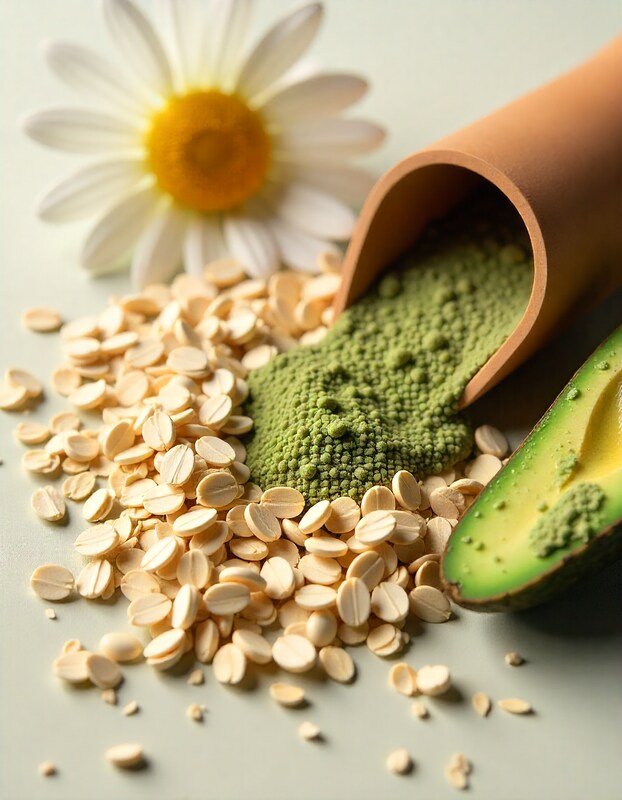
Colloidal oatmeal is one of the best natural ingredients for sensitive or irritated skin.

Benefits:

  • Reduces inflammation

  • Relieves itching and dryness

  • Repairs the skin barrier

  • Hydrates deeply

Oatmeal baths or masks work wonders for eczema or irritated skin.

Read More: Minimalist Skincare

How to Build a Skincare Routine Using Natural Ingredients

Building a simple and effective routine using natural ingredients doesn’t have to be complicated. Here is a suggested routine:

Morning Routine

  1. Aloe vera cleanser or gentle natural cleanser

  2. Rosewater toner

  3. Vitamin C serum

  4. Jojoba oil or lightweight moisturizer

  5. Sunscreen (always essential)

Night Routine

  1. Honey cleanser or oil cleanser

  2. Green tea toner

  3. Treatment: turmeric spot mask or natural serum

  4. Shea butter or nourishing moisturizer

The key is to choose the ingredients that match your skin type and needs.

Choosing the Right Natural Ingredients for Your Skin Type

For Oily Skin:

  • Aloe vera

  • Green tea

  • Rosewater

  • Jojoba oil

For Dry Skin:

  • Shea butter

  • Coconut oil

  • Honey

  • Oatmeal

For Sensitive Skin:

  • Oatmeal

  • Aloe vera

  • Rosewater

  • Chamomile

For Dull Skin:

  • Vitamin C

  • Turmeric

  • Honey

  • Rosehip oil

DIY Natural Skincare Recipes

1. Brightening Honey Mask

  • 1 tablespoon raw honey

  • A pinch of turmeric
    Mix and apply for 10–15 minutes.

2. Hydrating Aloe Gel Moisturizer

  • Aloe vera gel

  • A few drops of jojoba oil
    Perfect for daily hydration.

3. Oatmeal Calming Mask

  • 2 tbsp oatmeal

  • Warm water

  • Honey (optional)

Frequently Asked Questions

Q1: Are natural ingredients safe for all skin types?

Most natural ingredients are safe, but always patch-test to avoid allergic reactions.

Q2: Can natural ingredients replace medical treatments?

They can improve many concerns, but severe conditions may require dermatologist supervision.

Q3: How long does it take to see results from natural skincare?

Results usually appear within 4–8 weeks with consistent use.

Q4: Are natural ingredients as effective as synthetic skincare?

In many cases, yes—especially for hydration, anti-inflammatory care, and brightening.

Q5: What should I avoid mixing with natural ingredients?

Avoid mixing strong acids with ingredients like turmeric or raw honey.

Minimalist Skincare | A Practical Guide for Busy Women

minimalist skincare

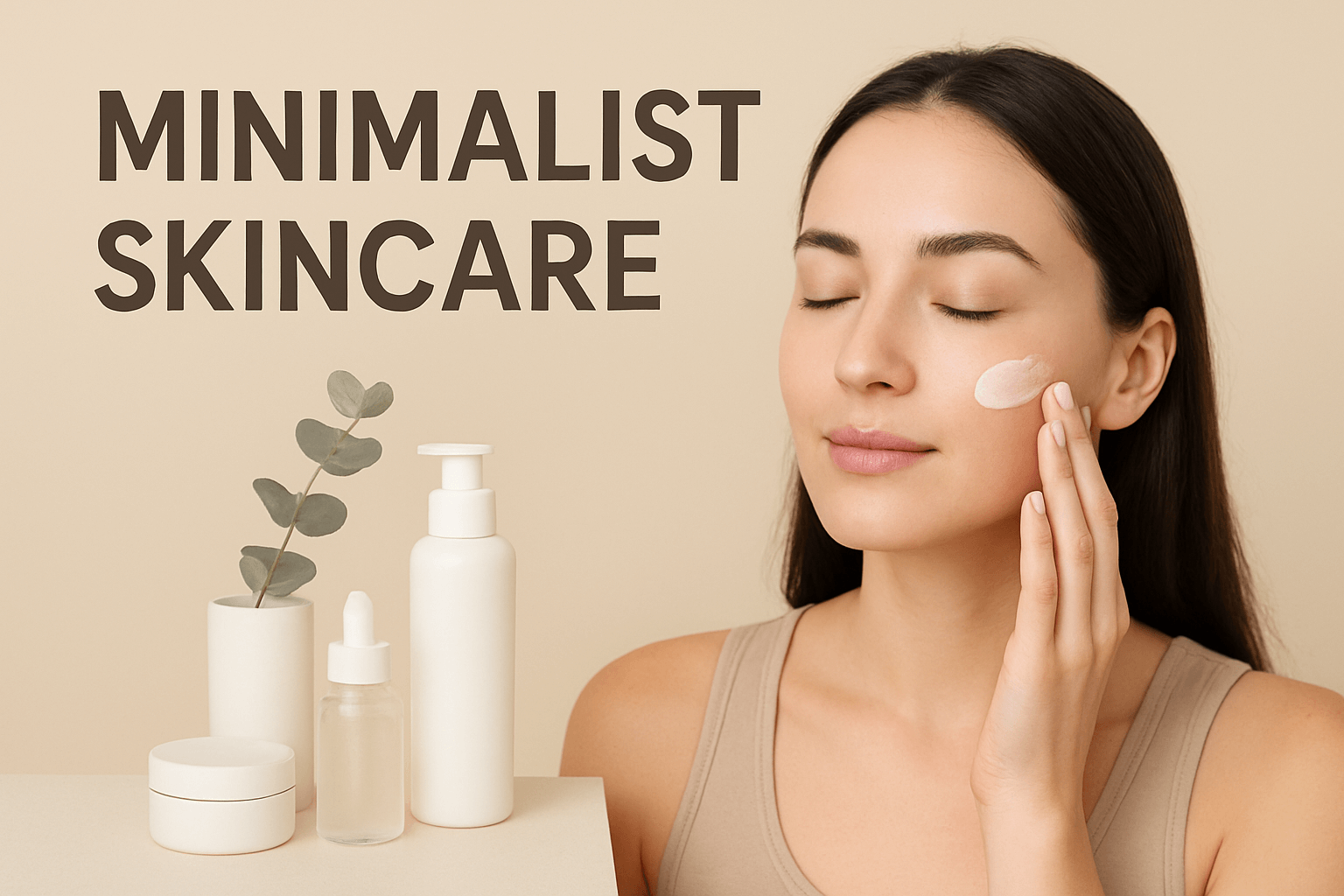
In today’s fast-paced world, more women are shifting away from complicated beauty routines toward a cleaner, more efficient approach known as minimalist skincare. Instead of filling the bathroom shelf with dozens of products, minimalist skincare focuses on simplicity, effectiveness, and long-term skin health. It is not just a trend—it’s a mindset that helps you save time, money, and effort while still achieving radiant, balanced skin.

Many women struggle with the overwhelming amount of beauty advice online, making it hard to decide which products truly matter. This is where a simple skincare routine comes in. By using only what your skin truly needs, you avoid irritation, maintain the skin barrier, and still enjoy visible results. Minimalism brings clarity, structure, and peace of mind—something every busy woman deserves.

In this long, detailed guide, you’ll learn the philosophy behind minimalist skincare, how to build a routine based on essential skincare steps, and how to choose multi-purpose skincare products that truly simplify your life.

Let’s begin with what minimalist skincare really means.

Glass Skin Routine

What Is Minimalist Skincare?

Minimalist skincare is a philosophy built around the idea that your routine should be simple, intentional, and tailored to your skin’s real needs. Instead of using 10–15 products every day, you focus on four or five highly effective ones.

This approach eliminates unnecessary steps and prevents the skin from becoming overwhelmed with fragrances, harsh chemicals, or heavy textures. It focuses on:

  • Fewer products

  • Better, high-quality ingredients

  • Consistency over complication

  • Healthy skin barrier

  • Preventing irritation rather than over-treating

Minimalist skincare is especially ideal as skincare for busy women, who want glowing skin without spending 30 minutes following a complicated regimen. Whether you’re a professional, a mom, a student, or simply someone who values efficiency, this routine helps you maintain beautiful skin with minimal effort.

Why Minimalist Skincare Works Better Than Overusing Products

Many people assume that using more products will improve their skin faster. But dermatologists warn against this. Too many steps can weaken your skin barrier, cause dryness, or lead to breakouts. Minimalist skincare works because:

1. It reduces irritation

When you apply multiple serums and acids, ingredients may clash. A simplified routine ensures harmony and reduces the risk of redness and sensitivity.

2. It strengthens the skin barrier

Healthy skin begins with a strong barrier. Minimalist skincare prioritizes moisturizers and hydration over aggressive treatments that strip the skin.

3. It’s cleaner and more intentional

You only use products with a clear purpose. Every step has a function—cleansing, moisturizing, protecting—not just filling space.

4. It is budget-friendly

You spend money on fewer products, which means you can invest in better-quality formulations that actually work.

5. It’s sustainable

Less product consumption means less waste, better for your skin and the environment.

I.st Aqua HA 2.0

Essential Skincare Steps in a Minimalist Routine

You don’t need a complicated routine to get healthy, glowing skin. Here are the essential skincare steps recommended for all skin types:

Step 1: Cleanser

A gentle cleanser removes dirt, oil, and impurities without stripping your skin. Avoid cleansers with alcohol, heavy fragrances, or harsh surfactants.

Tips:

  • Use a gel cleanser for oily skin

  • Cream cleanser for dry or sensitive skin

  • Cleansing once or twice a day is enough

Step 2: Moisturizer

This is the heart of minimalist skincare. A moisturizer hydrates, nourishes, and maintains the skin barrier. Choose a product with simple, effective ingredients like ceramides, glycerin, squalane, or hyaluronic acid.

Why it’s essential:
Hydration prevents premature aging and keeps the skin plump, smooth, and glowing.

Step 3: Sunscreen (Morning Routine Only)

A broad-spectrum SPF 30 or higher is crucial. Sunscreen is the most important product for preventing wrinkles, pigmentation, and sun damage.

Quick note:
Even if you don’t go outdoors much, UV rays penetrate windows—so sunscreen is non-negotiable.

Optional Step: Treatment Serum (Only When Needed)

Minimalist skincare doesn’t forbid treatments—it simply encourages intention.
Use one serum at a time, depending on your goal:

  • Niacinamide → for brightening + oil control

  • Hyaluronic acid → for hydration

  • Vitamin C → for radiance

  • Retinol → for anti-aging

Use only what your skin needs, not what trends suggest.

A Sample Simple Skincare Routine (Morning & Night)

Morning Routine

  1. Cleanser

  2. Moisturizer

  3. Sunscreen

Night Routine

  1. Cleanser

  2. Treatment serum (optional)

  3. Moisturizer

This simple skincare routine takes less than 5 minutes. It fits perfectly as skincare for busy women who want results without complexity.

How to Choose Multi-Purpose Skincare Products

One of the smartest ways to simplify your routine is by using multi-purpose skincare products. These products combine several benefits into one formula, reducing the number of steps without sacrificing results.

Examples include:

  • Moisturizer + SPF

  • Serum + moisturizer (“serum creams”)

  • Cleanser + makeup remover

  • Moisturizer with anti-aging ingredients

  • Sunscreen with hydrating properties

Benefits of Multi-Purpose Products

  1. Saves time: Fewer steps mean faster routines.

  2. Saves money: One product replaces two or three.

  3. Prevents irritation: Fewer layers = fewer ingredient conflicts.

  4. Ideal for travel: Lighter skincare bag.

To choose the right products, check the ingredient list. Look for niacinamide, ceramides, peptides, hyaluronic acid, and antioxidants—these offer maximum benefit with minimum steps.

Minimalist Skincare for Busy Women: How to Stay Consistent

Women with demanding schedules often struggle to stay consistent with skincare. Minimalist skincare solves this problem, but creating a habit still requires a few strategies:

1. Keep your routine in one place

Organize your essentials on a small tray or shelf for quick access.

2. Use products you enjoy

Pleasant textures and scents make it easier to stick to the routine.

3. Pair skincare with daily habits

For example:

  • Cleanse while showering

  • Moisturize right after brushing your teeth

  • Apply sunscreen next to your makeup station

4. Don’t chase trends

New products appear daily. Stick to your essentials unless your skin truly needs a new ingredient.

5. Track your skin’s reaction

Minimalist routines make it easier to identify what works or causes irritation.

What Minimalist Skincare Is NOT

Some misconceptions about minimalist skincare include:

  • It’s not “basic”; it’s strategic

  • It doesn’t mean avoiding treatments

  • It doesn’t forbid serums—just unnecessary ones

  • It doesn’t limit you to drugstore products

  • It doesn’t exclude self-care or pampering

Minimalism is about purpose, not deprivation. If a product genuinely benefits your skin, you keep it.

When You Should Add More Steps

Although minimalism works for most people, certain skin conditions may need additional care:

  • Acne-prone skin: May need salicylic acid

  • Hyperpigmentation: Vitamin C or niacinamide

  • Aging skin: Retinol or peptides

  • Very dry skin: Barrier-repair creams

Even in these situations, stick to one active ingredient at a time to avoid irritation.

Frequently Asked Questions about minimalist skincare

Q1: Is minimalist skincare suitable for all skin types?

Yes. Whether your skin is oily, dry, sensitive, or combination, you can tailor a simple routine to meet your needs.

Q2: Can I still use serums in a minimalist routine?

Absolutely. Minimalist skincare doesn’t remove serums—it simply encourages using one effective serum instead of layering many.

Q3: What is the most important step in minimalist skincare?

Sunscreen in the morning and moisturizer in both routines. These keep the skin barrier strong and prevent aging.

Q4: How many products do I really need?

Most people only need 3–4 products daily: cleanser, moisturizer, sunscreen, and an optional serum.

Q5: What if my skin is very sensitive?

Minimalism is perfect for sensitive skin. Choose fragrance-free products and avoid too many active ingredients at once.

The Ultimate Glass Skin Routine: Step-by-Step Guide for a Dewy

Glass Skin Routine

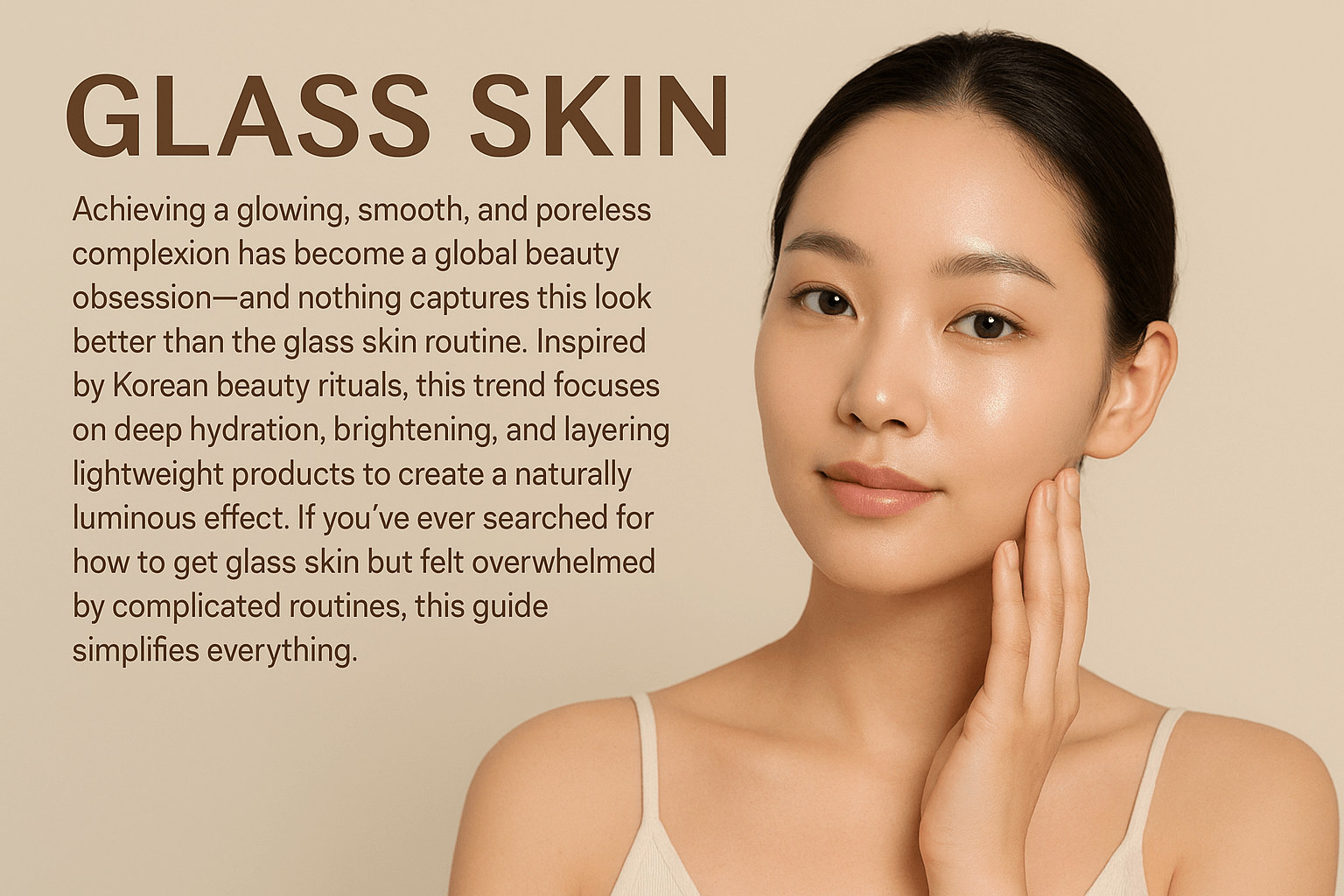
Achieving a glowing, smooth, and poreless complexion has become a global beauty obsession—and nothing captures this look better than the glass skin routine. Inspired by Korean beauty rituals, this trend focuses on deep hydration, brightening, and layering lightweight products to create a naturally luminous effect. If you’ve ever searched for how to get glass skin but felt overwhelmed by complicated routines, this guide simplifies everything.

Korean beauty experts consider hydration the backbone of any glowing skin regimen. That’s why a proper Korean skincare routine is built around gentle cleansing, light layers, and moisture-boosting steps that enhance your skin barrier. With the right combinations, anyone can enjoy a fresh, translucent, and radiant look.

glass skin routine you can start today

1. Start with Double Cleansing

Using an oil cleanser followed by a water-based cleanser ensures your skin is completely clean without stripping moisture. Double cleansing removes sunscreen, makeup, and dirt—preparing the skin for deeper absorption of treatments.

2. Exfoliate 2–3 Times Per Week

Gentle chemical exfoliation helps remove dull skin cells and enhances luminosity. Look for AHAs like lactic acid or BHAs like salicylic acid. Over-exfoliation can cause irritation, so balance is key for a healthy glow.

3. Use a Hydrating Toner

A lightweight hydrating toner replenishes moisture immediately after cleansing. Choose formulas with hyaluronic acid, glycerin, or rice extract—popular ingredients in any Korean skincare routine.

4. Apply an Essence for Deep Hydration

Essence is essential in the glass skin routine. It adds a layer of deep, fast-absorbing hydration that helps create that dewy, plump look. Essences with fermented ingredients offer enhanced brightness and smoothness.

5. Add a Brightening Serum

To boost clarity and reduce uneven skin tone, use a serum enriched with niacinamide or vitamin C. Brightening serums help you achieve the coveted reflective glow associated with how to get glass skin.

6. Lock in Moisture with a Lightweight Gel Cream

A water-based moisturizer keeps the skin supple and hydrated without feeling heavy. This extra layer helps maintain a plump, fresh appearance throughout the day.

7. Seal Everything with a Dewy-Finish Sunscreen

Sun protection is one of the most important dewy skin tips. Choose a sunscreen with a radiant or moisture-boosting finish to preserve your glow while protecting your skin from damage.

8. Optional: Overnight Sleeping Mask

For an extra-glass effect, use a sleeping mask 1–2 times weekly. These masks hydrate intensely, making your skin appear more luminous the next day.

Our Skin Booster Products

Frequently Asked Questions about Glass Skin Routine

Q1: How long does it take to see results from a glass skin routine?

Most people start noticing smoother and more hydrated skin within 2–4 weeks, depending on consistency and skin type.

Q2: Can oily skin achieve glass skin?

Yes. Glass skin is about hydration, not oil. Lightweight gel moisturizers and non-greasy essences work perfectly for oily skin.

Q3: Is the Korean skincare routine necessary to get glass skin?

Not necessarily, but its principles—hydration, gentle care, and layering—are the foundation of glass skin and help you get faster results.

Q4: Do I need many products to get glass skin?

You can start with a simple routine: cleanser, essence, serum, moisturizer, and sunscreen. Additional steps are optional.

Q5: What’s the best way to get a natural dewy glow?

Focus on hydration, avoid over-exfoliation, and use lightweight layers that keep the skin plump and moisturized.