Best Ingredients for Glass Skin
Glass skin refers to a complexion that appears intensely hydrated, smooth, pore-refined, and light-reflective. Achieving this effect depends less on makeup and more on ingredient selection, barrier repair, and deep hydration at multiple skin layers.
Below are the most effective, dermatologist-recommended ingredients that directly support the glass skin look.
Hyaluronic Acid (Multi-Molecular HA)
Hyaluronic acid is foundational for any glass skin routine because it binds water within the skin.
Why it matters:
-
Holds up to 1,000× its weight in water
-
Plumps fine lines instantly
-
Improves light reflection (key for “glass” effect)
Best practices:
-
Apply on damp skin
-
Seal with moisturizer
-
Use multi-weight formulas for deeper penetration
Niacinamide (Vitamin B3)
Niacinamide balances oil, refines pores, and strengthens the barrier — three pillars of glass skin.
Key benefits:
-
Minimizes pore appearance
-
Regulates sebum
-
Improves uneven tone
-
Boosts ceramide production
Ideal concentration: 2–5% for daily use without irritation.
Snail Mucin (Advanced Barrier Repair)
Popular in Korean skincare, snail mucin supports regeneration and deep hydration.
Why it’s effective:
-
Rich in glycoproteins
-
Enhances wound healing
-
Improves elasticity
-
Creates a dewy finish without heaviness
It is especially beneficial for post-acne texture and dehydration lines.
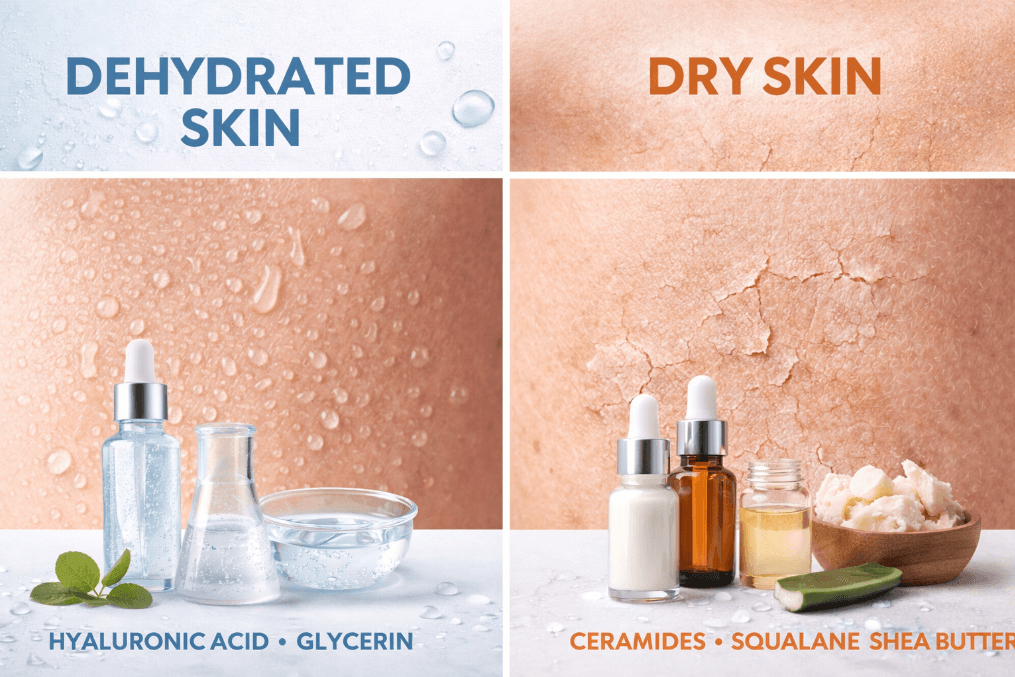
Ceramides
Glass skin is impossible without a healthy barrier. Ceramides restore and seal hydration.
Functions:
-
Prevent transepidermal water loss (TEWL)
-
Repair compromised skin
-
Reduce sensitivity
-
Improve smoothness
Look for ceramide blends combined with cholesterol and fatty acids.
Polyglutamic Acid
Often compared to hyaluronic acid but works differently.
Advantages:
-
Forms a moisture film on the surface
-
Enhances HA performance
-
Provides immediate glow
Excellent for layering in glass skin routines.
Alpha Arbutin
Clarity and translucency are essential for glass skin. Alpha arbutin targets pigmentation safely.
Benefits:
-
Fades dark spots
-
Evens tone
-
Suitable for sensitive skin
-
Works well with vitamin C
Centella Asiatica (Cica)
Inflammation disrupts skin smoothness. Centella calms and repairs.
Key actions:
-
Reduces redness
-
Speeds healing
-
Strengthens barrier
-
Improves hydration retention
Ideal after exfoliation or professional treatments.
Gentle Chemical Exfoliants (AHAs & PHAs)
Smooth texture is critical for reflective skin.
Recommended acids:
-
Lactic acid → Hydrating exfoliation
-
Mandelic acid → Sensitive skin friendly
-
PHAs → Mild resurfacing + hydration
Use tips:
-
1–3× weekly only
-
Avoid over-exfoliation
-
Always follow with barrier repair
Supporting Ingredients That Enhance Results
While not always primary, these ingredients amplify the glass skin effect:
-
Panthenol → Deep soothing hydration
-
Beta-Glucan → Strong humectant + repair
-
Squalane → Lightweight lipid replenishment
-
Green Tea Extract → Antioxidant protection
-
Peptides → Improve elasticity and bounce
Ingredient Layering Strategy for Glass Skin
Order of application impacts results.
Suggested layering:
-
Hydrating toner (HA / Panthenol)
-
Essence (Snail mucin / Centella)
-
Treatment serum (Niacinamide / Arbutin)
-
Booster (Polyglutamic acid / Peptides)
-
Moisturizer (Ceramides)
-
SPF (Daytime non-negotiable)
Layering thin → thick ensures optimal absorption.
Mistakes That Prevent Glass Skin Results
Even with the best ingredients, improper use limits outcomes.
Common issues:
-
Over-exfoliating the barrier
-
Skipping moisturizer after HA
-
Mixing too many actives
-
Ignoring sunscreen
-
Using harsh foaming cleansers
Consistency outperforms complexity.
Q&A About Best Ingredients for Glass Skin
Q1: Can I achieve glass skin with ingredients alone?
Yes, if dehydration and texture are mild. Deeper concerns may require professional hydration boosters.
Q2: How long before results appear?
Hydration glow can appear within days; pore and tone refinement may take 4–8 weeks.
Q3: Are oils necessary for glass skin?
Not always. Lightweight lipids like squalane are sufficient for most routines.
Q4: Can sensitive skin follow a glass skin routine?
Yes — focus on ceramides, centella, snail mucin, and PHAs instead of strong acids.
Q5: Which ingredient is most essential?
Hyaluronic acid remains the core due to its unmatched hydration capacity.