Hydration Skincare: The Science of Deep Skin Moisture
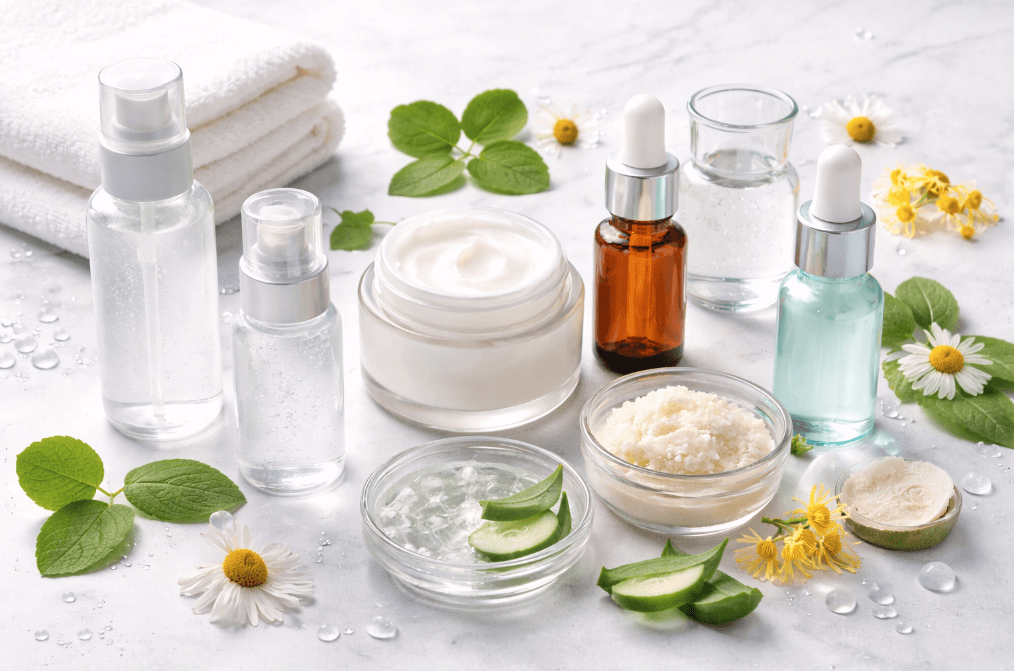
Hydration skincare focuses on increasing water content within the skin rather than simply sealing the surface. Proper hydration improves elasticity, smoothness, barrier strength, and the reflective glow associated with healthy skin.
Unlike basic moisturizing, hydration targets the movement, retention, and distribution of water across skin layers.
Why Hydration Skincare Matters
Dehydrated skin can affect all skin types — oily, combination, and even acne-prone.
When hydration is lacking, skin may show:
-
Dull tone and fatigue
-
Fine dehydration lines
-
Tightness after cleansing
-
Increased oil production
-
Makeup patchiness
Restoring hydration helps normalize skin function and enhances treatment results.
Key Ingredients in Hydration Skincare
Hyaluronic Acid (HA)
A cornerstone ingredient due to its water-binding capacity.
Benefits:
-
Immediate plumping effect
-
Smooths fine lines
-
Improves suppleness
For best results, apply to damp skin and seal with a moisturizer.
Glycerin
One of the most effective humectants in skincare.
Why it works:
-
Draws water from environment and deeper skin layers
-
Strengthens barrier function
-
Non-irritating and acne-safe
Often paired with HA for layered hydration.
Polyglutamic Acid
A newer hydration molecule gaining popularity.
Key advantages:
-
Holds more water than HA (surface level)
-
Enhances skin softness
-
Reduces transepidermal water loss
Aloe Vera
Provides both hydration and soothing benefits.
Ideal for:
-
Sensitive skin
-
Post-procedure care
-
Sun exposure recovery
Panthenol (Pro-Vitamin B5)
A dual hydrator and barrier repair agent.
Functions:
-
Attracts moisture
-
Calms irritation
-
Improves elasticity
Hydration vs Moisturization: Understanding the Difference
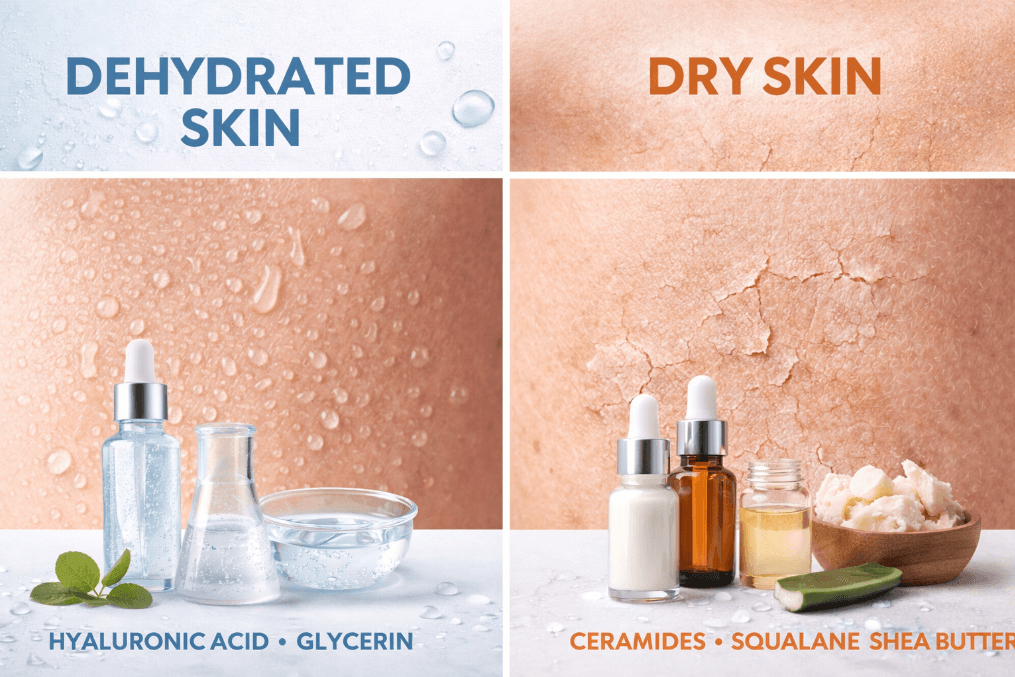
Many routines fail because hydration and moisturization are treated as the same step.
Hydration:
-
Adds water to skin
-
Uses humectants (HA, glycerin)
Moisturization:
-
Locks water in
-
Uses occlusives/emollients (ceramides, squalane)
Both are required for lasting results.
Building an Effective Hydration Skincare Routine
Step-by-Step Structure
-
Gentle Cleanser
Avoid sulfates that strip natural moisture. -
Hydrating Toner
Preps skin for absorption. -
Essence or Ampoule
Delivers concentrated humectants. -
Hydration Serum
HA, polyglutamic acid, peptides. -
Moisturizer
Seals hydration with ceramides or lipids. -
SPF (Daytime)
Prevents dehydration from UV damage.
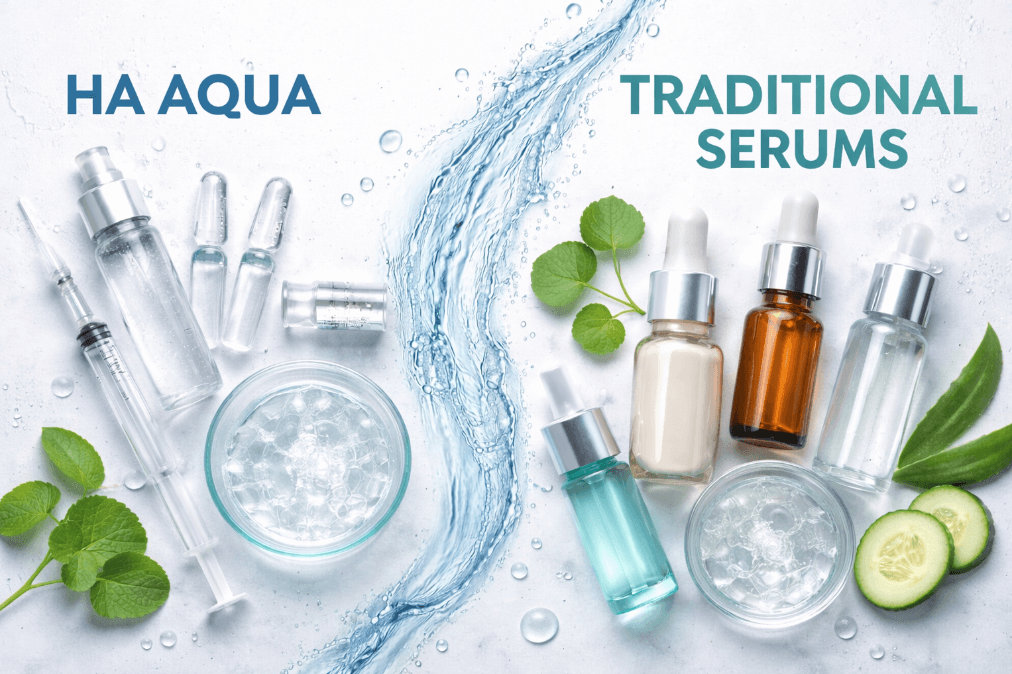
Professional Hydration Treatments
For deeper or faster results, in-clinic options may complement topical skincare.
Popular treatments include:
-
Skin boosters (micro-injected HA)
-
Mesotherapy hydration cocktails
-
Biorevitalization treatments
These target dermal hydration where topical products cannot fully reach.
Hydration Tips That Improve Results
-
Apply humectants on damp skin
-
Use lukewarm — not hot — water
-
Limit over-exfoliation
-
Add a humidifier in dry climates
-
Drink water, but rely on topical hydration too
Hydration is both internal and external.
Signs Your Hydration Routine Is Working
You may notice:
-
Increased skin bounce
-
Smoother texture
-
Reduced fine lines
-
Better product absorption
-
Natural, glass-like glow
Consistency is key — hydration improves progressively.
Q&A About hydration skincare
Q1: Can oily skin skip hydration products?
No. Dehydration can increase oil production as compensation.
Q2: How often should I use hydrating serums?
Daily, morning and night, unless paired with strong actives.
Q3: Is drinking water enough for hydrated skin?
Internal hydration helps overall health, but topical humectants are still necessary.
Q4: Can hydration reduce wrinkles?
It softens fine dehydration lines but does not replace collagen treatments.
Q5: What is the best ingredient for instant hydration?
Hyaluronic acid provides the fastest visible plumping effect.